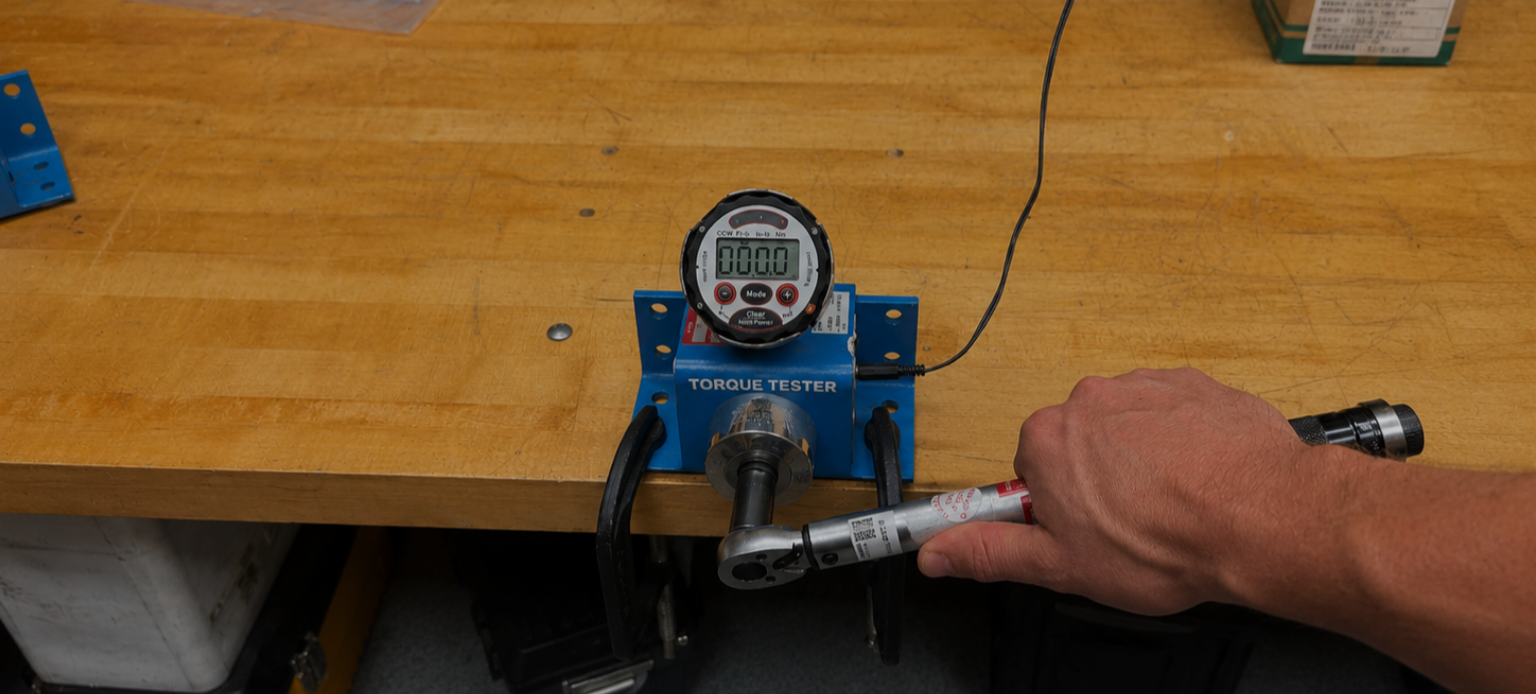
Mechanical Calibration
Common Mechanical Calibrations
RPM
Torque
Speed (in/min)
Distance
Our capabilities extend far beyond the examples shown above. Reach out to learn how we can support your specific calibration needs.
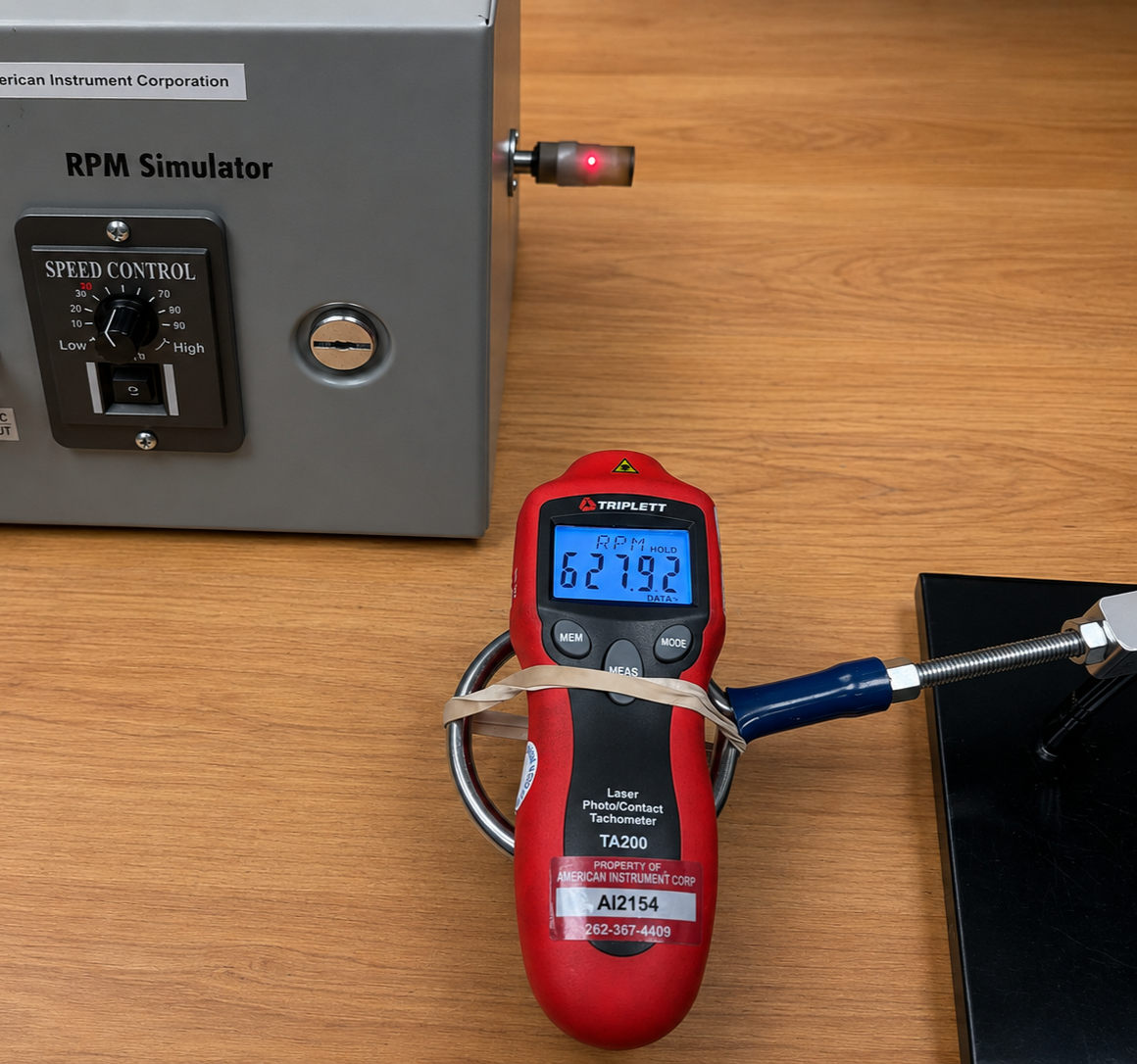
Why Mechanical Calibration Matters
Over time, wear, vibration, temperature changes, etc. can cause mechanical components to shift from their intended settings. Calibrating mechanical components ensures accuracy and repeatability, reduces the risk of safety malfunctions, and ensures compliance to standards such as ASTM and ISO 9001.
Furthermore, by regularly calibrating your components, your company can save money. Calibrations act as a form of preventative maintenance. By ensuring that critical components are operating correctly, the equipment is less likely to fail which leads to downtime and having to replace expensive components. Likewise, if a machine is not running correctly, the product may need to be scrapped, or other quality issues may arise.